Book Summary: Why We Sleep
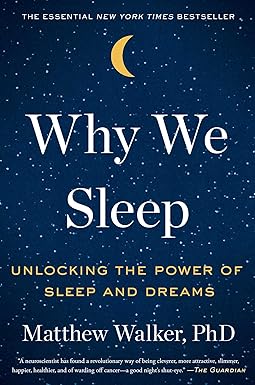
To Sleep . . .
- The Importance of Sleep:
- Getting enough sleep is crucial for physical and mental health.
- Sleep deprivation can lead to a weakened immune system, increased risk of cancer, Alzheimer's disease, diabetes, heart disease, and psychiatric conditions.
- Drowsy driving is a major cause of traffic accidents and fatalities.
- The Mystery of Sleep:
- Science has historically struggled to explain why we need sleep.
- Sleep seems counterintuitive from an evolutionary perspective, as it leaves us vulnerable.
- Recent research has revealed numerous benefits of sleep for the brain and body.
- The Benefits of Sleep:
- Sleep improves learning, memory, decision-making, emotional regulation, creativity, and immune function.
- It also helps regulate blood sugar, appetite, body weight, and cardiovascular health.
- The Consequences of Sleep Deprivation:
- Sleep deprivation has wide-ranging negative effects on physical and mental health.
- It is important to prioritize sleep and address any sleep deficiencies.
- Sleep disorders can also cause daytime fatigue and impairment.
Caffeine, Jet Lag, and Melatonin
- Circadian Rhythm:
- The circadian rhythm is a 24-hour cycle that regulates sleep-wake patterns, body temperature, hormone release, and other bodily functions.
- It is influenced by light and darkness, with sunlight acting as a zeitgeber to reset the internal clock.
- Individual differences exist in circadian rhythms, with "morning larks" and "night owls" having different preferences for sleep and wake times.
- Melatonin:
- Melatonin is a hormone released by the pineal gland in response to darkness.
- It signals to the brain and body that it is time to sleep.
- Melatonin supplements can be helpful for jet lag but may not be effective for other sleep issues.
- Sleep Pressure:
- Adenosine is a chemical that builds up in the brain during wakefulness and creates sleep pressure.
- Caffeine blocks adenosine receptors, leading to temporary alertness.
- The effects of caffeine can last for several hours and may disrupt sleep.
- Sleep Debt:
- Insufficient sleep leads to a buildup of adenosine and a sleep debt.
- Chronic sleep deprivation can cause fatigue, impaired cognitive function, and increased health risks.
Defining and Generating Sleep
- Identifying Sleep:
- Observable signs of sleep include a stereotypical position, lowered muscle tone, reduced responsiveness, easy reversibility, and a regular timed pattern.
- Self-assessment of sleep involves a loss of external awareness and a sense of time distortion.
- Two Types of Sleep:
- There are two main types of sleep: NREM (non-rapid eye movement) and REM (rapid eye movement) sleep.
- NREM sleep is divided into four stages, with stages 3 and 4 being the deepest.
- REM sleep is associated with dreaming.
- The Sleep Cycle:
- NREM and REM sleep cycle throughout the night in a predictable pattern.
- The ratio of NREM to REM sleep changes across the night, with NREM dominating early and REM dominating later.
- Brainwave Activity:
- Brainwave activity differs between wakefulness, NREM sleep, and REM sleep.
- Deep NREM sleep is characterized by slow, synchronized brainwaves, while REM sleep has fast, desynchronized brainwaves similar to wakefulness.
- Sleep spindles are bursts of brainwave activity that protect sleep.
Ape Beds, Dinosaurs, and Napping with Half a Brain
- The Universality of Sleep:
- All animal species studied to date sleep, suggesting that sleep is essential for life.
- Sleep likely evolved with or very soon after life itself.
- Variations in Sleep:
- Different species have different sleep needs and sleep patterns.
- Factors influencing sleep needs include body size, brain complexity, diet, and predator-prey relationships.
- NREM and REM Sleep Across Species:
- NREM sleep is present in all species, while REM sleep is found only in birds and mammals.
- Aquatic mammals may have a different form of REM sleep or may not experience it at all.
- Sleep Deprivation in Animals:
- Under extreme circumstances, such as starvation or migration, animals can experience sleep deprivation.
- The white-crowned sparrow has remarkable resilience to sleep deprivation during migration.
- Human Sleep Patterns:
- Modern humans typically sleep in a monophasic pattern, while pre-industrial cultures often have biphasic sleep patterns with an afternoon nap.
- Humans are unique among primates in having shorter sleep times but a higher proportion of REM sleep.
- The shift from tree to ground sleeping may have contributed to the evolution of human sleep patterns.
Changes in Sleep Across the Life Span
- Fetal Sleep:
- Fetuses spend most of their time in a sleep-like state, with a high proportion of REM sleep.
- REM sleep is crucial for brain development and maturation.
- Alcohol consumption during pregnancy can disrupt fetal REM sleep and may have long-term consequences.
- Childhood Sleep:
- Infants and young children have polyphasic sleep patterns with multiple sleep bouts throughout the day and night.
- As children get older, their sleep patterns become more consolidated and they transition to biphasic and then monophasic sleep.
- The ratio of NREM to REM sleep changes throughout childhood, with NREM sleep becoming more dominant.
- Adolescent Sleep:
- Adolescents experience a shift in their circadian rhythms, leading to later bedtimes and wake times.
- Deep NREM sleep plays a role in brain maturation and synaptic pruning during adolescence.
- Early school start times can contribute to sleep deprivation in teenagers.
- Sleep in Midlife and Old Age:
- Older adults experience a decline in sleep quality, particularly in deep NREM sleep.
- Sleep problems in older adults can contribute to cognitive decline, physical health issues, and increased mortality risk.
- Maintaining a regular sleep schedule and getting exposure to sunlight can help improve sleep in older adults.
Your Mother and Shakespeare Knew
- The Benefits of Sleep for the Brain:
- Sleep is essential for various brain functions, including memory, learning, emotional regulation, and creativity.
- Sleep and Memory:
- Sleep before learning helps refresh the brain's capacity for new memories.
- Sleep after learning helps consolidate memories and prevent forgetting.
- NREM sleep, particularly slow-wave sleep, is crucial for memory consolidation.
- REM sleep plays a role in memory integration and the formation of creative associations.
Too Extreme for the Guinness Book of World Records
- Sleep Deprivation and the Brain:
- Sleep deprivation has numerous negative consequences for brain function.
- Concentration and Drowsy Driving:
- Sleep deprivation impairs concentration and can lead to microsleeps, which are brief lapses in attention that can be dangerous while driving.
- Drowsy driving is a major cause of traffic accidents and fatalities.
- The Effects of Sleep Deprivation:
- Studies have shown that sleep deprivation can impair cognitive performance, including reaction time, attention, and decision-making.
- Sleep deprivation also affects emotional regulation, leading to increased irritability, anxiety, and risk-taking behavior.
- Recovery from Sleep Deprivation:
- It takes several nights of good sleep to recover from sleep deprivation.
- Naps can provide temporary benefits but do not fully compensate for lost sleep.
Cancer, Heart Attacks, and a Shorter Life
- Sleep Deprivation and the Body:
- Sleep deprivation has wide-ranging negative effects on physical health.
- Cardiovascular Health:
- Sleep deprivation can increase blood pressure, heart rate, and the risk of heart disease, stroke, and heart failure.
- Deep NREM sleep has a protective effect on the cardiovascular system.
- Metabolism and Weight Gain:
- Sleep deprivation can disrupt hormones that regulate appetite and metabolism, leading to increased hunger, cravings, and weight gain.
- Short sleep is associated with an increased risk of type 2 diabetes and obesity.
- Reproductive Health:
- Sleep deprivation can lower testosterone levels in men and disrupt ovulation in women, leading to decreased fertility.
- Sleep loss can also make people appear less attractive.
- Immune Function:
- Sleep deprivation weakens the immune system, making people more susceptible to infections and illnesses.
- Short sleep is associated with an increased risk of cancer and may promote tumor growth.
Routinely Psychotic
- REM Sleep and Dreaming:
- REM sleep is characterized by vivid dreaming, hallucinations, delusions, disorientation, emotional swings, and amnesia.
- Brain Activity During Dreaming:
- MRI studies have shown that REM sleep involves increased activity in visual, motor, emotional, and memory-related brain regions, while the prefrontal cortex is deactivated.
- This pattern of brain activity is consistent with the characteristics of dreaming.
- The Content of Dreams:
- Dreams often incorporate elements of recent waking experiences, particularly emotional themes and concerns.
- Dreams are not simply replays of waking life but involve a more complex process of memory integration and association.
Dreaming as Overnight Therapy
- The Function of Dreams:
- Dreams are not simply epiphenomena of REM sleep but serve important functions for emotional and mental health.
- Overnight Therapy Theory:
- REM sleep and dreaming help to process and resolve emotional experiences, reducing their negative impact.
- The absence of noradrenaline during REM sleep creates a safe environment for emotional memory reprocessing.
- Dreams and Emotional Resolution:
- Studies have shown that dreaming about emotional experiences can lead to reduced emotional reactivity and improved well-being.
- REM sleep and dreaming play a role in the treatment of PTSD and other mental health conditions.
- Dreaming and Social Cognition:
- REM sleep helps to recalibrate the brain's emotional processing systems, improving our ability to recognize and interpret facial expressions.
- Sleep deprivation can impair social cognition and lead to misinterpretations of emotions.
Dream Creativity and Dream Control
- Dreaming and Creativity:
- REM sleep and dreaming promote creative problem-solving by forging novel connections between seemingly unrelated pieces of information.
- The dreaming brain is biased toward seeking out distant associations and extracting overarching insights.
- Examples of Dream-Inspired Creativity:
- Many famous creative breakthroughs, such as the periodic table of elements and the discovery of neurotransmitters, were inspired by dreams.
- Memory Processing During REM Sleep:
- REM sleep enhances relational memory processing, allowing us to connect different pieces of information and form new insights.
- REM sleep also promotes the extraction of abstract knowledge and the formation of overarching concepts.
- Lucid Dreaming:
- Lucid dreaming is the state of being aware that you are dreaming and having some degree of control over the dream experience.
- Studies have shown that lucid dreamers can intentionally control their dream actions and even their physiological responses.
Things That Go Bump in the Night
- Sleep Disorders:
- Sleep disorders can have significant impacts on health and well-being.
- Somnambulism:
- Somnambulism refers to sleep disorders involving movement, such as sleepwalking, sleep talking, and sleep eating.
- These episodes typically occur during deep NREM sleep and are usually harmless, but in rare cases can lead to more complex behaviors.
- Insomnia:
- Insomnia is the most common sleep disorder, characterized by difficulty falling asleep, staying asleep, or waking up too early.
- Chronic insomnia can be caused by psychological factors, such as anxiety and worry, as well as physical and environmental factors.
- Narcolepsy:
- Narcolepsy is a neurological disorder characterized by excessive daytime sleepiness, sleep paralysis, and cataplexy.
- It is caused by a deficiency in the neurotransmitter orexin, which regulates the sleep-wake cycle.
- Fatal Familial Insomnia:
- Fatal familial insomnia is a rare genetic disorder that causes progressive insomnia and ultimately death.
- It is caused by a mutation in the prion protein gene, which leads to brain degeneration.
iPads, Factory Whistles, and Nightcaps
- Factors Affecting Sleep:
- Modern society has created numerous factors that disrupt sleep, including electric light, regularized temperature, caffeine, alcohol, and alarm clocks.
- The Impact of Light:
- Artificial light at night suppresses melatonin release and delays sleep onset.
- Blue light from electronic devices is particularly disruptive to sleep.
- Alcohol and Sleep:
- Alcohol is a sedative that can initially help with sleep onset but ultimately fragments sleep and suppresses REM sleep.
- Chronic alcohol use can lead to sleep disturbances and delirium tremens.
- Temperature and Sleep:
- A cool bedroom temperature is optimal for sleep, as it helps lower core body temperature.
- Modern heating and cooling systems can disrupt the natural temperature fluctuations that promote sleep.
- Alarm Clocks:
- Alarm clocks abruptly awaken people from sleep, causing stress and potentially harming cardiovascular health.
- The snooze button exacerbates these negative effects.
Hurting and Helping Your Sleep
- Sleeping Pills:
- Prescription sleeping pills do not induce natural sleep and can have negative side effects, including next-day grogginess, memory impairment, and increased mortality risk.
- The effectiveness of sleeping pills is often limited and may not outweigh the risks.
- Cognitive Behavioral Therapy for Insomnia (CBT-I):
- CBT-I is a non-pharmacological treatment for insomnia that has been shown to be more effective than sleeping pills.
- It involves techniques to change sleep habits, reduce anxiety, and improve sleep quality.
- Sleep Hygiene:
- Good sleep hygiene practices, such as maintaining a regular sleep schedule, avoiding caffeine and alcohol, and creating a relaxing bedtime routine, can promote healthy sleep.
- Exercise and Diet:
- Regular exercise can improve sleep quality and duration, while a healthy diet can also contribute to better sleep.
Sleep and Society
- The Sleep Loss Epidemic:
- Insufficient sleep is a widespread problem in developed nations, with significant consequences for health, safety, productivity, and education.
- Sleep in the Workplace:
- Sleep deprivation can lead to decreased productivity, creativity, motivation, and ethical behavior in employees.
- Companies that prioritize sleep can see improvements in employee performance, well-being, and financial outcomes.
- Sleep Deprivation as Torture:
- Sleep deprivation is a form of torture that causes severe physical and psychological harm.
- It is an ineffective method for obtaining reliable information and should be abolished.
- Sleep and Education:
- Early school start times contribute to sleep deprivation in children and teenagers, leading to impaired academic performance, behavioral problems, and increased risk of mental health issues.
- Later school start times have been shown to improve student outcomes and reduce traffic accidents.
- Sleep and Health Care:
- Sleep deprivation in medical professionals can lead to medical errors, patient harm, and increased mortality risk.
- Hospitals should prioritize sleep for both patients and staff to improve patient outcomes and reduce costs.
A New Vision for Sleep
- Solutions for Sleep Deprivation:
- Addressing the sleep loss epidemic requires a multi-pronged approach, including individual, educational, organizational, and societal changes.
- Individual Transformation:
- Technology can be used to create personalized sleep environments that promote healthy sleep.
- Wearable sleep trackers and smart home devices can help individuals monitor their sleep and adjust their habits.
- Educational Change:
- Sleep education should be included in school curricula to raise awareness about the importance of sleep.
- Public health campaigns can also help inform the public about the risks of sleep deprivation.
- Organizational Change:
- Companies should implement policies that promote employee sleep, such as flexible work schedules, nap pods, and sleep education programs.
- Hospitals should prioritize sleep for both patients and staff.
- Public Policy and Societal Change:
- Governments should implement policies to address drowsy driving, such as public awareness campaigns and stricter laws.
- Health insurance companies could incentivize healthy sleep habits.